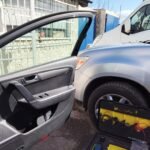
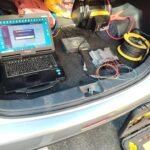
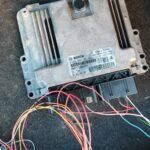
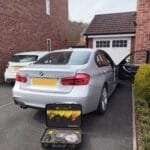
Curious about ECU remapping and how it can enhance your driving experience? You’ve come to the right place. Our FAQ page serves as your comprehensive resource, addressing common queries and shedding light on the intricacies of vehicle tuning. Whether you’re a seasoned car enthusiast or new to the world of remapping, we’ve compiled a wealth of information to help you make informed decisions about optimising your vehicle’s performance. From understanding the basics of ECU remaps to exploring the benefits and potential concerns, let us guide you through everything you need to know. Dive into our FAQ section and embark on a journey towards unlocking the full potential of your car with Remap-UK.
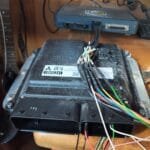
Yes. Nearly all European petrol and diesel cars and commercial vans along with motorbikes, tractors and even plant equipment are equipped with an ECU (Electronic Control Unit) so can be successfully remapped.
Beyond standard Stage 1 and Stage 2 performance and economy tuning, we provide specialized software adjustments including AdBlue Delete, DPF (Diesel Particulate Filter) Delete, EGR (Exhaust Gas Recircirculation) Delete, and Gearbox (TCU) Remapping.
A Stage 1 remap is designed for completely stock vehicles, safely optimizing software parameters within standard hardware limits. A Stage 2 remap requires upgraded physical hardware - such as an upgraded fuel pump, intercooler, intake, or exhaust exhaust components — to achieve higher power gains.
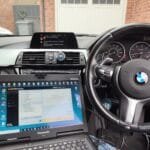
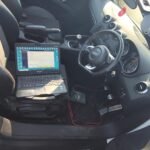
We require your vehicle for a minimum of two hours. Unlike low-quality competitors who quickly "flash" generic internet files in 30 minutes, Remap-UK performs full diagnostic health checks, custom writes your file on-site, and extensively test-drives the vehicle to ensure perfect tuning. To put this plainly a Golf R we recently did after he had a poor quality remap somewhere else, took 5 hours to get right.
Yes, we offer a mobile service across Macclesfield and East Cheshire. However, because we deliver genuine custom tuning, our mobile service still requires full access to specialist diagnostics and internet connectivity to guarantee the file perfectly matches your exact vehicle requirements.
On turbo-diesel engines, an economy-focused map or a balanced Stage 1 remap typically improves fuel efficiency by 10% to 20% under normal driving conditions, due to increased low-down torque which allows you to change gears earlier. Turbo petrol engines on the other hand very rarely see gains this high, this is due clearly to how the vehicle is driven.
Yes. Although ECU remapping changes are software-based and virtually undetectable visually, they represent a physical modification to your vehicle's factory specifications. You are legally obligated to notify your insurance provider. A note here though is a lot of customers that buy a 2nd hand vehicle, don't know it's already remapped! Always ask for a reciept to keep in your paperwork!
If your warranty documentation explicitly states that ECU remapping voids the coverage, it likely will. However, legally, a manufacturer cannot reject a warranty claim unless they can definitively prove that the aftermarket software modification directly caused the component failure.
Yes, provided it is a custom map. At Remap-UK, we only write custom software that stays safely within the mechanical limits of your vehicle's engine, clutch, and turbo components, ensuring long-term reliability is not compromised.
When written correctly by specialists, a remap will not negatively impact your MOT. For petrol vehicles, carbon monoxide (CO) levels must remain below 0.2% to 0.3%. For diesel vehicles, they must pass a Metered Smoke Test matching the manufacturer’s limit sticker under your bonnet. Healthy engines easily pass these limits post-remap.
No. The optimized software data is written permanently to the non-volatile memory of your car’s ECU. Disconnecting or replacing your car battery will have absolutely no effect on your tuning settings.
If a manufacturer or main dealer updates your ECU software during a routine service or recall, it may overwrite our modified file. If this happens, get in touch with us and we can re-install your custom tuning profile for you.
Yes. If you decide to sell the vehicle or want it returned to factory stock performance for any reason, we can completely reverse the changes and restore your ECU back to its original pre-remap settings. Most BMW - VW and other makes are what's termed VR files nowadays, thus any Master remap company can revert to standard in minutes.
Yes. We offer dedicated TCU (Transmission Control Unit) remapping for automatic, DSG, and S-Tronic gearboxes. Tuning the gearbox matches the new engine torque curves, leading to quicker shift speeds, optimized shift points, and smoother power delivery. Before commiting to TCU remap, you should have the engine done first though, the gains are greater with an engine remap and change how the gearbox behaves anyway.
Manufacturers build global engine maps to comply with diverse global markets. They must account for extreme climates, sub-standard fuel quality in developing countries, and varying tax structures or emissions tiers. Our custom tuning purely optimizes the car for UK driving conditions and premium local fuel. The term tuning isn't strictly correct! We simply find the restrictions impossed.
No. In almost all modern vehicles, your factory drive modes will remain fully functional. The remap enhances the overall engine parameters, meaning "Sport" mode will feel significantly sharper, while "Eco" mode will remain highly efficient.
Your vehicle must be in good mechanical health. We recommend checking that your car has no active warning lights or hidden fault codes. Ensure your regular servicing is up to date, and filters (especially fuel and air filters) are clean, as the extra power will expose any pre-existing component wear.
No, we generally advise against it. Remapping an engine with an underlying mechanical or electronic fault puts unnecessary stress on the system. We run full diagnostics prior to installation, and any underlying mechanical issues should be repaired first. This of course does not apply to things like Adblue-DPF-EGR problems. A delete obviously gets rid of the engine light.
For turbocharged petrol vehicles, we highly recommend using high-octane premium fuel (like Shell V-Power or Tesco Momentum) to achieve the maximum advertised power and cleanest combustion. For diesel vehicles, standard fuel is fine, though premium diesel will help keep fuel injectors cleaner over time. Only use busy petrol stations as they are more likely to have 'fresh' fuel delivered regularly.
Because the engine is working more efficiently and producing more power, engine oil breaks down slightly faster under load. While you don't need exotic parts, we strongly advise shortening your oil change intervals (e.g., changing oil every 8,000 to 10,000 miles rather than long-life 15,000-mile schedules) to protect components like the turbocharger.
Happy with your gains? Enter your vehicle details below!
✓ Vehicle copied! Set as email subject line.